How to Know When Something Is Recharging You Rather Than Distracting You

3 Steps to Minimize Workplace Distraction And Take Dorsum Control of your Focus
At that place's no denying that nosotros're living through uncertain times. The spread of COVID-19 has forced more people than ever to adjust to working from home. And along with relearning how to communicate and collaborate when you're non in the office one matter is condign painfully clear: Domicile is rarely a distraction-costless infinite.
Out of the nearly 90,000 people who took StackOverflow'southward latest developer survey, the majority said the greatest challenge to their productivity is a distracting work environment.
Whether information technology's the ding of an incoming email or someone request you lot to help out with family obligations, there's ever something waiting on the edges to interrupt your focus and flow. And while many of these distractions need to exist dealt with right away, most don't. Unfortunately, we're pretty bad at making that distinction.
Equally the authors of The Book of Life write:
"Human beings are pathetically prone to distraction. It's about comically easy to get the states to stop concentrating on anything fifty-fifty a tiny bit challenging and turn gratefully to something more than immediately gratifying or interesting and almost certainly a lot less productive."
Non only are nosotros quick to give in to distraction, but the impact it has on our productivity is massive. In her research, UC Irvine professor Gloria Mark constitute that once distracted, information technology takes united states of america an average of 23 minutes and 15 seconds to get dorsum to our original chore!
While nosotros've written at length about how to be more than productive, and the best daily routines and habits to build, none of these tips matter if you lot're constantly distracted.
In this guide, we'll cover the root causes of distraction and how to avoid them and be more productive and focused wherever you're working from.
What causes lark?
We all know what it ways to be distracted in an abstract sense, however, nailing down just what lark is tin be difficult.
Do a quick Google search and you'll be told that lark is "a thing that prevents someone from giving their total attention to something else." But that 'thing' could exist, well… anything.
To make sense of what lark is and how to avoid it, we need to narrow our definition a scrap.
What we're really talking about here are workplace distractions. The things—both internal and external—that interruption our sustained attending and take time abroad from our about productive work.
Co-ordinate to Daniel Goleman, author of Focus: The Hidden Power of Excellence, there are two principal kinds of distraction:
- Sensory distractions (external). These are the things happening around united states of america. For case, noisy coworkers, (or roommates/family/partners) phone calls, music, notifications on your phone, etc…
- Emotional distractions (internal). These are the thoughts and emotions that cause our attending to falter. For instance, suddenly remembering an email you lot accept to respond to or thinking nigh how much laundry has been piling up since you lot started working from habitation.
While this is a good high-level definition, to really understand the actionable ways we can remove distractions from the workday, we demand to narrow our definition again.
Going across just internal and external distractions, a full theory of workplace distraction needs to address iii specific areas:
- Environmental distractions: These are the distractions you get from your surroundings. Noise. Coworkers/family unit. Interruptions.
- Digital distractions: These are the distractions that come from the tools you use every twenty-four hours. Your telephone. Apps. Websites.
- Internal distractions: This is the internal nagging that pulls you away from the task you're focused on and compels you lot to do something dissimilar (like checking email or conversation, browsing social media, or cleaning your kitchen).
One time distracted, it takes an boilerplate of 23 minutes and 15 seconds to go back to the original job.
In order to rebuild your focus and go more washed, you lot need to set on each of these factors head-on.
How to minimize all three types of distractions and rebuild your productivity
The hardest office of talking about distraction is that it can be so many things. As Joshua Rothman writes in The New Yorker, distraction "tin be internal or external, habitual or surprising, annoying or pleasurable."
To tackle the many faceted angles of workplace and home distraction, we need to go after each contributing factor head on. Allow'southward get-go with 1 of the worst: your work environment.
Step 1: Go rid of the distractions in your work environment (especially when you're working from home)
Our work surroundings has a profound impact on our ability to focus and fight distraction. Where you work is the "invisible hand" that guides you through the workday. Unfortunately, many of usa get into a estrus when it comes to our work environment. We go to the aforementioned place, sit at the aforementioned desk, and go bellyaching by the aforementioned things.
But as psychologist David Neal writes, nosotros lose our self-control when we repeat the same actions in the same surroundings:
"People, when they perform a beliefs a lot—especially in the same environment, same sort of physical setting—outsource the command of the behavior to the surroundings."
Instead, studies show it's easier to alter your beliefs when you lot alter upward your surround. Luckily, there are a few unproblematic changes yous can make that will aid you lot immediately.
Remove the clutter from your workspace
There's a famous quote attributed to Albert Einstein that goes:
"If a chaotic desk is a sign of a cluttered mind, of what, and then, is an empty desk-bound a sign?"
While it's a fun quip at the neat freaks among united states of america, mod scientific discipline has proven this statement incorrect. Co-ordinate to neuroscientists at Princeton, physical ataxia in your piece of work environment competes for your attention and results in decreased operation and increased stress.
Concrete clutter in your work environs competes for your attention and results in decreased operation and increased stress.
Fifty-fifty the bones things around you—your telephone, to-do list, notes, books—can go massive distractions. (In fact, ane study establish that the mere presence of your phone can significantly reduce your cognitive capacity.)
This merely gets worse when you lot piece of work from home and don't accept a dedicated infinite and cease up working from a couch or the kitchen tabular array.
Unfortunately, it's not every bit unproblematic as but throwing everything abroad. Instead, you need to develop amend habits and routines effectually what yous accumulate and why. Here are a few suggestions:
- Give yourself clear limitations. We have a tendency to fill up upward the infinite we give something. And then whether it's Twitter followers, open browser tabs, or unfinished tasks, setting limitations for yourself is a expert way to first immigration upwardly your work clutter.
- Conduct a monthly review of your workspace. Take time to clean, sort, and discard both your physical and digital ataxia. If you want to take this a step further, spend the last few minutes of your twenty-four hours cleaning out and dealing with your browser windows, desktop and downloads folder.
- Supersede your ataxia with personal items. Every bit Alan Henry writes in The New York Times, personal effects like a photo or sweater you can habiliment if it gets besides cold "will make your desk—flexible seating or not—experience similar a place you can settle in and get work done." If you're working from home, this means curating the things in your home office (or workspace) to continue you lot motivated, yet focused on the work at hand.
Design your immediate surround for "laziness"
With your clutter dealt with, you lot can now optimize your work environment fifty-fifty more for focus. Simply to first, nosotros need to understand a little bit about how the brain works.
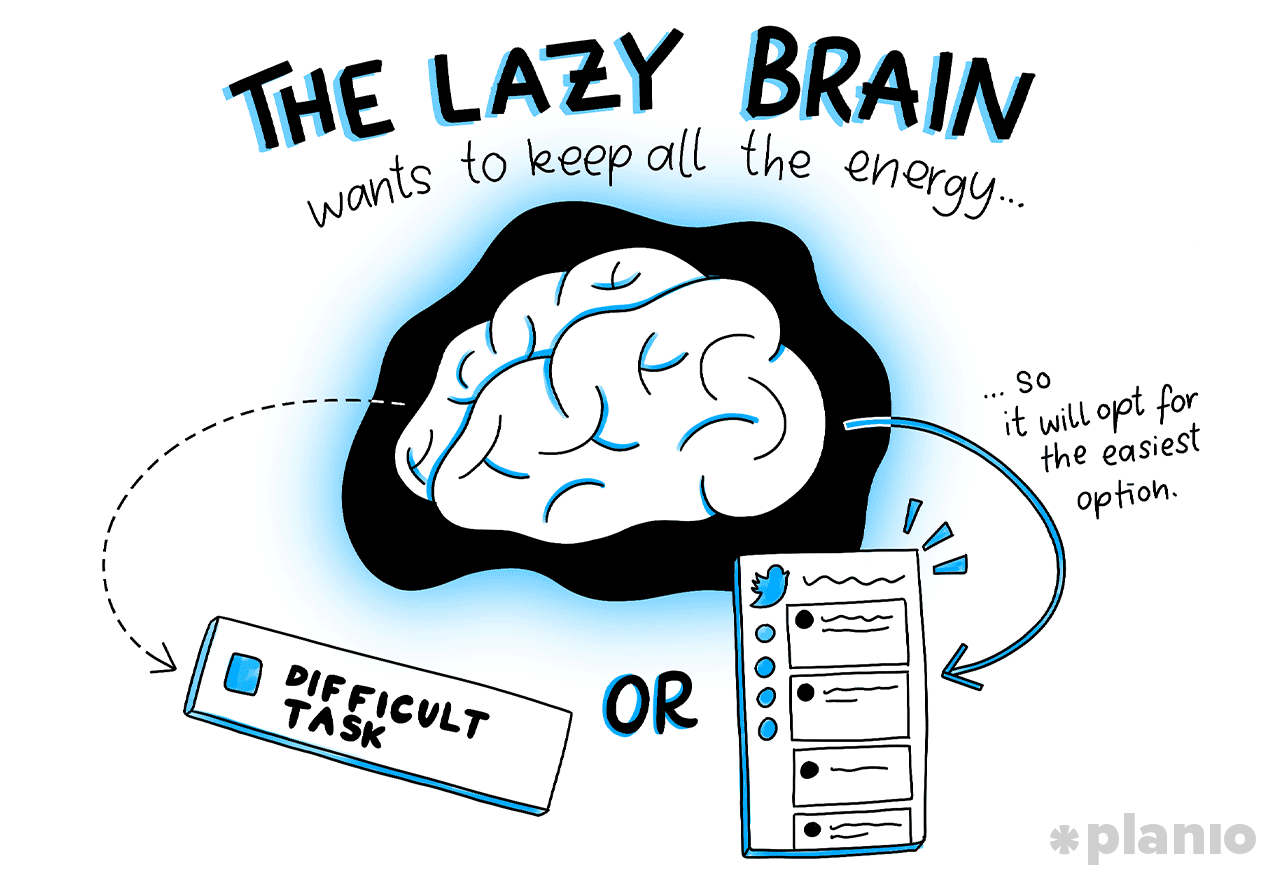
Our brains are lazy. They want to conserve as much free energy as possible and have a trend to opt for the easiest pick available. The easier information technology is for you to admission distractions (like social media, your telephone, or TV) the harder those things will be to block out. It's why you find yourself flipping through Twitter when faced with a hard job.
But by making information technology harder to practise distracting things, you'll be less likely to do them. Stanford psychologist BJ Fogg calls this "designing for laziness."
This could hateful adding a social media blocker like Freedom or RescueTime to terminate yous from using distractions during the mean solar day. Or, locking your phone in another room so you're less probable to pick it up.
Nonetheless, y'all tin can also brand good behaviors easier. One example is from the author and illustrator Austin Kleon who splits his work environment in 2 depending on what work he wants to be easier:
- A digital desk with his computer and other digital tools for when that is his focus.
- An analog desk with art supplies, newspapers, and books for when he wants it to be easier to exercise art.
If y'all're at home, recall near how you can create different "zones" for different work. Perchance you lot have a desk for when you demand to focus on in-depth tasks and a infinite in the living room when y'all're doing shallow work and want to be around family.
Choose the correct music (or none at all) for the right task
1 of the worst distractions in whatsoever work environment is noise. According to recent studies, virtually people say the well-nigh distracting aspect of their work environment is unwanted noise along with a lack of sound privacy (not being able to control what you hear or who hears what you're saying).
Unless you lot take a dedicated home office (and have bully neighbors), you're most likely to deal with distracting noises during the solar day. And while silence has been shown to exist the best option for keeping you focused, listening to music tin can also help cake distractions.
According to Daniel Levitin, the author of This Is Your Encephalon on Music, at that place are certain rules you demand to follow when using music to help you focus:
- Engaging music is bad for focus. Stick with classical or "chill" soundtracks.
- Don't mind to songs with lyrics. Songs with words are basically the aural version of multitasking.
- Put your favorite tracks on repeat. Repetitive sounds tin can put u.s.a. in a state of flow.
Finally, if you're opting for silence, information technology's good to invest in dissonance-canceling headphones (even if nada is playing through them.
Optimize your workplace for light, nature, and air
Finally, while you lot might think that working in a windowless cave would mean fewer distractions, the opposite is actually true.
Studies show that natural light, fresh air, and natural elements like plants or even a view of nature reduce mental fatigue and make it easier to focus for longer. At home effort to situate your work environs by a window where you can get low-cal and fresh air. At a minimum, pick upwards a plant or 2 to add to your desk.
With your habitation and workplace optimized to be distraction-free, it's fourth dimension to do the aforementioned to the apps and tools you lot use every day.
Fifty-fifty though they're designed to help you be more productive, near tools—like email, chat, and other collaborative apps—offer besides many opportunities for getting sidetracked.
Even just casually glancing at your inbox can ship y'all spiraling downward a path of distraction instead of maintaining our focus. In fact, UC Irvine's Gloria Marker found that most workers but spend three minutes on a task before switching to something else and simply two minutes on a digital tool.
You can't give upward your email, chat, or projection management tool. So how can y'all make sure they're working for you and non the other fashion around?
Do a notification inspect on your apps and tools
Today, pretty much every tool and app wants to send you lot notifications. But you need to exist ruthless with what you allow access to your attention.
In fact, ane written report institute that in about offices, workers spend 80% of their fourth dimension on collaborative activities like emails, calls, chats, and meetings. Notifications constantly pull you lot abroad from what you want to focus on. They're the worst kind of "productive distraction" you can get as you feel similar you're doing the correct thing, fifty-fifty though you're distracted from the bigger picture.
Notifications are the worst kind of "productive lark" you lot can go. You feel like you're doing the right thing, fifty-fifty though y'all're distracted from the bigger picture.
Instead of giving your apps and tools total control over your time, go through and inspect each 1 to see how important they truly are. When it comes to your telephone, designer and writer Erin Casali suggests breaking each ane down into three groups:
- Instant: Anything you want to know about as shortly as it happens. For case, texts, calls, or other important messages. Keep these notifications every bit they are.
- Relevant: Annihilation y'all want to know about at your convenience (but not immediately). Turn off all notifications except for icon badges then you can check at your leisure.
- Kill: Anything you lot actually don't need to know almost. These you can either turn off all notifications or delete the app entirely.
You can also practice a notification audit on your other workplace tools. This could hateful muting certain channels in your chat app. Setting app notifications to come up equally a daily digest rather than all at once. Or turning off desktop notifications on your inbox so it doesn't constantly pull at your attention.
Learn to love Do-Not-Disturb mode
While a notification audit will aid yous reduce the overall distractions coming at you, there are times where you need extra help. Pretty much every device you accept contains some sort of practise-not-disturb fashion—a global setting where no new notifications, alerts, messages, etc… will come through.
This is a powerful tool for minimizing distraction, especially when you have serious work to get downwards to. Even so few people do information technology out of fearfulness they'll "miss out" on something important.
Notwithstanding, equally Paris Martineau wrote later on leaving her telephone in DND style for 8 months:
"Sure, the downside is I don't answer texts and emails immediately, but the upside is I don't answer texts and emails immediately… I haven't technically missed anything. The notifications are all at that place on my screen waiting for me if I really feel the need to know what's going on, just that determination now happens on my terms."
Of course, you can't go DND all day long. Instead, try a few short stretches during the workday—simply 15-twenty minutes—and see how much more you go washed.
Push as much of your piece of work as possible to your laptop
Your telephone is a massive source of distraction during the workday. And while changing notification settings and using DND fashion can assistance minimize its touch, information technology'southward likewise worth it to remember of your overall human relationship with your telephone at piece of work.
In many cases, you use your phone for both work and your personal life. This ways every ping and notification could exist a meaningless status update. Or it could be a sick kid, family emergency, or a surprise visit from a friend.
Psychologists call this variable rewards and it's the aforementioned reason we love to gamble. Every pull of the slot machine handle offers a wealth of opportunities.
To reduce your phone's touch on your focus, move important work off of it. Only cheque emails on your laptop. Delete your chat apps.
Non only volition this lower your likelihood of checking your phone throughout the day, but computers and laptops are our become-to tools for doing meaningful piece of work. This ways yous're more than likely to scrutinize your time spent on information technology in a way yous wouldn't with your phone.
Utilise lark-free tools (and settings)
While you tin can try to reduce the distractions your apps and tools ship you, another option is to simply use less-distracting apps. Most modernistic workplace tools take settings, features, or alternatives that are designed to help you focus.
For example, instead of using a full word processor, endeavour a simple markdown editor like iA Author or Focused. Instead of a complicated note-taking tool similar Evernote, utilize something more pared down similar Simplenote. Or instead of a complicated projection management tool like Asana or Jira, utilize a more convenient option similar Planio.
The tools y'all use are just like your work environment. They can either distract or assistance you focus. The right tool gives you what you need when you lot need it, instead of inundating you with options, menus, and distractions.
Step 3: Minimize your internal distractions
The final piece of the distraction puzzle is agreement how and why we distract ourselves. Nosotros may say we want to be focused during the workday, but our deportment ofttimes speak otherwise.
Here are a few examples:
- Y'all're bad at keeping rails of your tasks so you lot constantly bank check in on project direction tools and strategy docs.
- Yous're scared of "missing out" so yous go along your inbox open all the fourth dimension and go involved in every chat.
- Y'all want to look good in front of your boss so yous feel compelled to respond speedily to every bulletin and at all times of twenty-four hours and night.
As Daniel Goleman, author of Focus: The Subconscious Power of Excellence, writes:
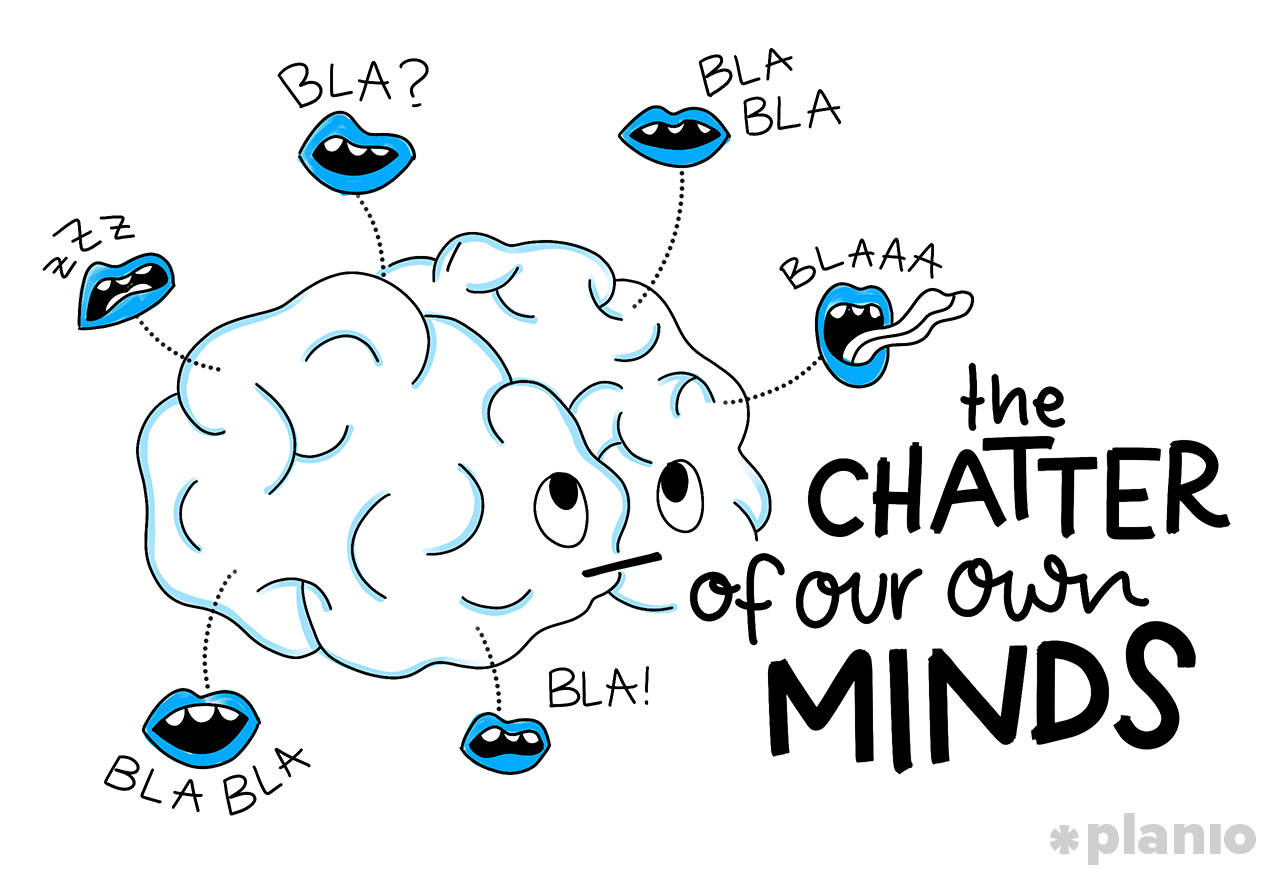
"Information technology'southward non the churr of people around united states of america that is the most powerful distractor, simply rather the chatter of our own minds."
More than simply changing a setting on an app or cleaning up your work environment, this involves being hyper-aware of your actions and optimizing them for sustained focus.
Prioritize ruthlessly so you know what work matters
1 of the main reasons we go looking for distractions is that we're bored. We've been working on a task for too long or don't see the value in it and then our brain starts looking for something more highly-seasoned. While some advice would say this comes down to willpower, studies have shown that we can't will ourselves into behavior change.
Instead, the easiest way to minimize distractions is to make sure y'all're working on the right tasks.
As Curt Steinhorst, writer of Can I Take your Attention, writes:
"Distraction, at its core, is this: confusion almost what matters."
There are tons of strategies for how to prioritize your work. Withal, my favorite method is to employ the Eisenhower Matrix and categorize tasks as either of import or urgent.
Here's how we explained it in our guide on How to Become a More than Productive Software Engineer.
Developed by former United states of america president Dwight Eisenhower, the matrix is a simple four-quadrant box that helps you lot divide 'urgent' tasks from 'of import' ones. In basic terms, urgent tasks are things you feel like you demand to react to right away, similar emails, phone calls, texts, or news. While important tasks are ones that contribute to your long-term mission, values, and goals.
The matrix is a simple four-quadrant box that explains what to practise with each type of chore:
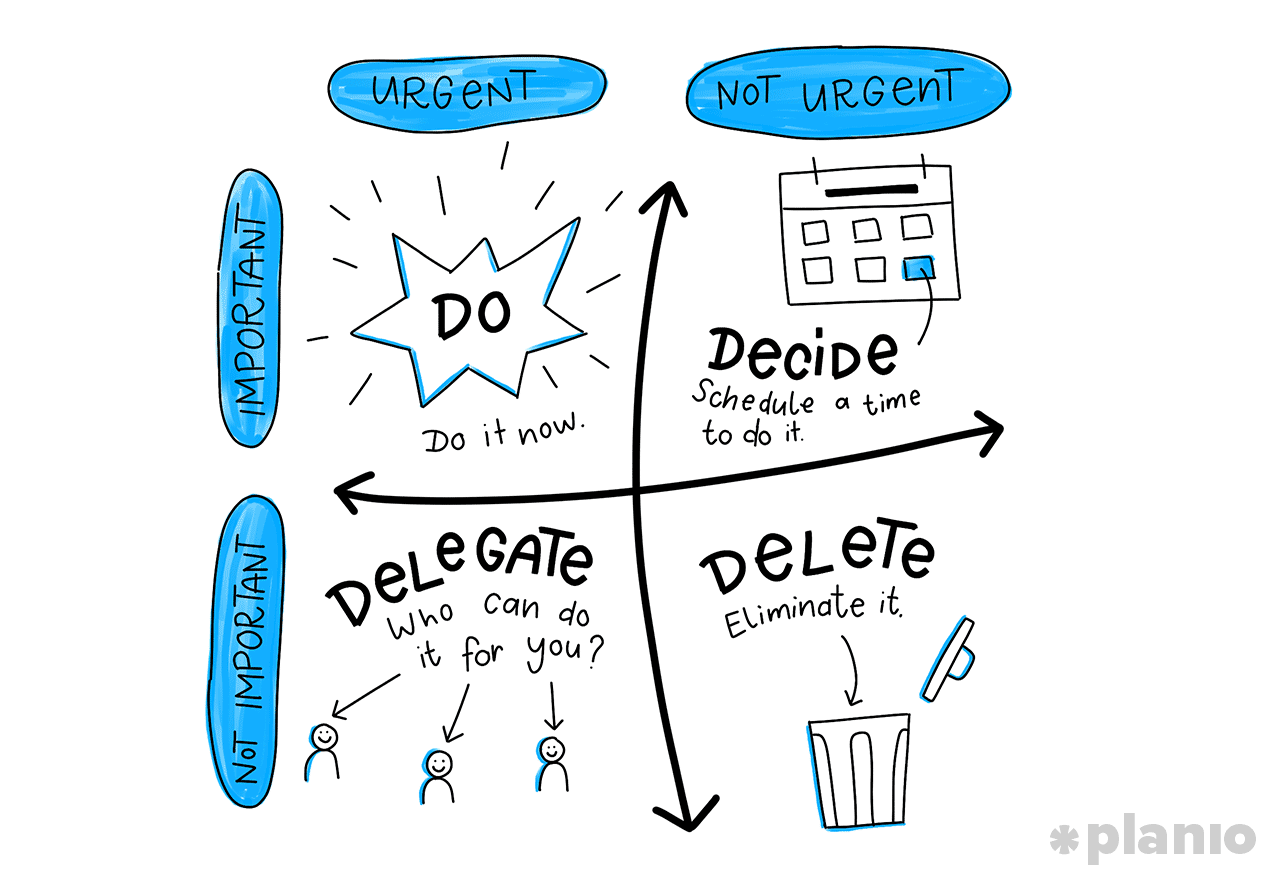
- Of import and urgent: Do these now!
- Important but non urgent: Schedule a fourth dimension to practice these.
- Not important and urgent: Delegate to someone else.
- Not important and not urgent: Become rid of these.
Apply a productivity organisation like Getting Things Done to organize your time
Prioritization helps you spend more time on things that affair (and not become distracted). However, y'all still need a system for keeping you organized and focused. A productivity system like Getting Things Done (GTD) is a great manner to turn your scattered, distracted brain into a productivity auto.
GTD helps you minimize distractions for a number of reasons. First, it captures all your to-dos, tasks, and projects in one identify so they don't float into your heed at the wrong time. Next, it makes information technology and so yous e'er know what needs to exist done next.
As Nicole Dieker writes in The Billfold:
"There's a weird brain-affair that happens when you put all of your open mental loops onto a single list. Yous literally terminate thinking about them until information technology's time to go to the grocery store and yous open the listing to run across all of the groceries you need in a single place."
If you want to get started with GTD, a great place is in our Guide to Getting Things Done in 2019.
Of course, you also need a tool to assistance organize everything and set deadlines. Planio is a great option for teams of all sizes. Commencement your free 30-day trial today!
Batch your communication time (and set clear expectations with your team)
Out of all the things in your workday that will distract you from piece of work that matters, communication is the worst.
The way near of the states use electronic mail and conversation during the workday is really just another class of multitasking. But think about how often you bounciness back and forth between your inbox and more important work. (If y'all're similar virtually people, you "cheque in" every 6 minutes or then!)
This is an peculiarly big problem for remote teams who feel the need to exist performative at work (i.due east. e'er be available and exist a office of every conversation).
Instead, set bated specific times in the 24-hour interval for checking in with your team. This type of "bursty" communication not only helps quiet that inner voice telling y'all to bank check email all day, merely it can also make you more productive and creative.
However, for this to piece of work, your entire team needs to know when you lot're available (and when you're not). Make sure to communicate clearly when you lot'll be around and set expectations on response times.
Follow your torso'south natural menses of energy and accept more breaks
Lastly, nosotros get more hands distracted when we're tired.
Our trunk follows an ebb and menses of free energy throughout the day called the Cyclic Rhythm. This is a 24-hr internal clock that dictates when yous're alert and when you're tired.
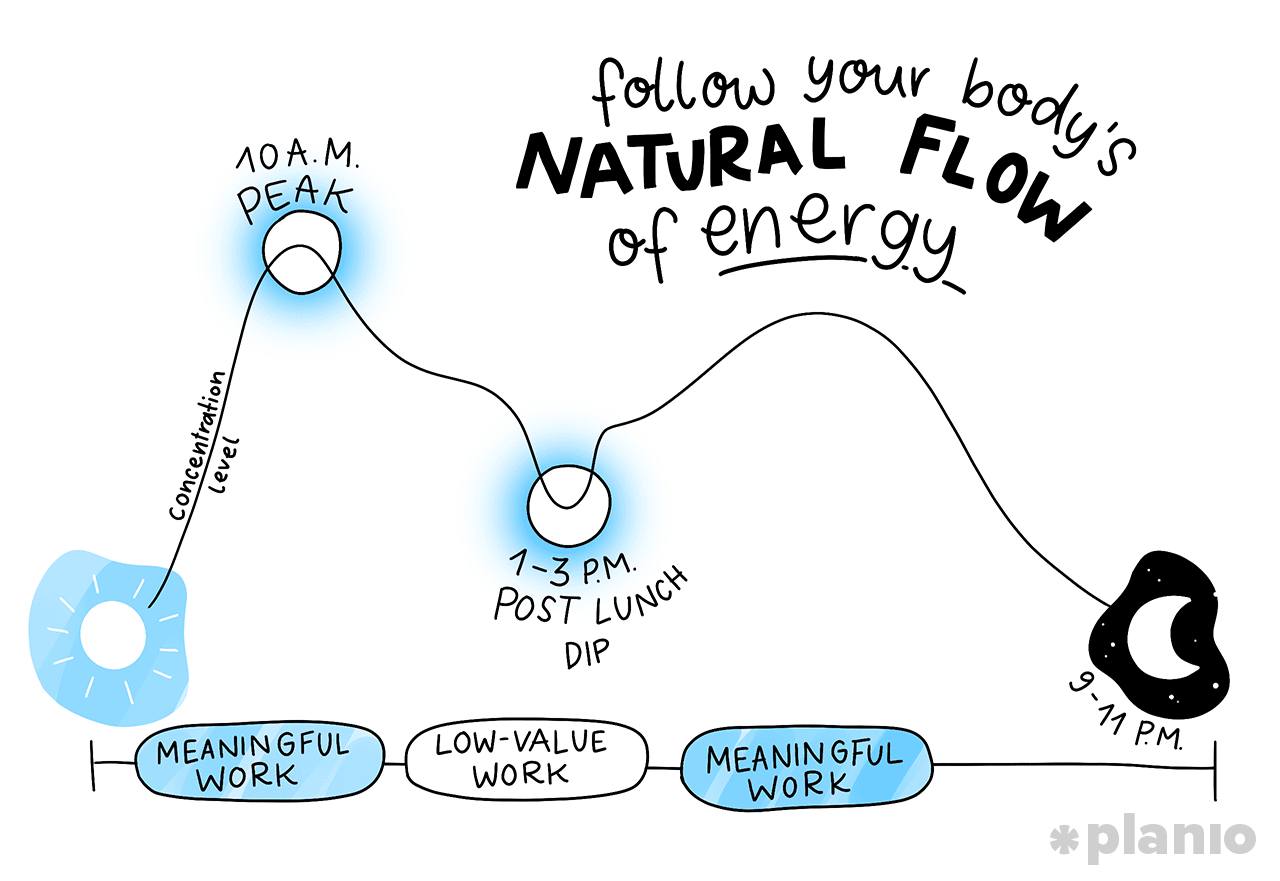
The problem is, the more you lot effort to do tasking work when y'all're tired, the more your encephalon will go off looking for an easier lark (and at that place are tons of these in your house!). Instead, understanding your energy levels helps you schedule your day so you can work with them.
While everyone'southward rhythm is slightly dissimilar, most people follow a similar bicycle:
- Subsequently waking upward and breaking out of our sleep inertia our energy levels start to naturally rising
- Past around 10 am we've hitting our elevation concentration levels that ride out until a natural postal service-lunch energy dip between i-iii pm
- In the afternoon, our energy levels ascent again until falling off again sometime between nine–11pm when virtually of us go to bed
The central here is to match your tasks to your energy levels. That means meaningful work in the morning when y'all're most alarm and depression-value work like emails and communication when you lot're more naturally tired.
The more than you tin can follow your body'south energy levels, the less likely your brain will go off looking for a distraction.
You lot don't have to alive a distracted life
It seems like nosotros're spending more and more of our lives in a distracted country. And whether that'southward from our environs, the tools we utilise, our own internal problems, or a combination of all 3 doesn't really matter. What does thing is that this doesn't have to be our default country.
Past following these tips, we can larn how to minimize the distractions in our workday and be more than focused, productive, and happy.
Source: https://plan.io/blog/minimize-distraction/
0 Response to "How to Know When Something Is Recharging You Rather Than Distracting You"
Post a Comment