Innovation Days – Light Weight Construction
Munich, Federal republic of germany – The concluding stop of the twenty-four hours for the English speaking journalists at BMW'due south Innovation Twenty-four hour period was Light Weight Construction. Various pairs of parts were arrayed effectually the room, with a production function and a lightweight version forming the pairings.
At start it seemed to be a bit under whelming, but upon farther reflection it fabricated more sense. BMW's EfficientDynamics isn't about ONE Large THING, it's about a multitude of minor things that add upward to significant savings in fuel apply and emissions.
Sprinkled into the mix were aluminum parts, which are finding in that location way into production vehicles. Items like the 5er GT hatch are made out of aluminum and doors and fenders for other cars are also made of aluminum. While some makers have done the unibody core in aluminum, BMW seems to be centering their chassis development on specialty steels that can be fabricated lighter through special production processes.
 Also on display was a clutch and brake pedal box that was a molded high strength plastic slice. The original was a stamped steel associates made up of v pieces and fasteners. The new single molding is non only lighter but easier to gather.
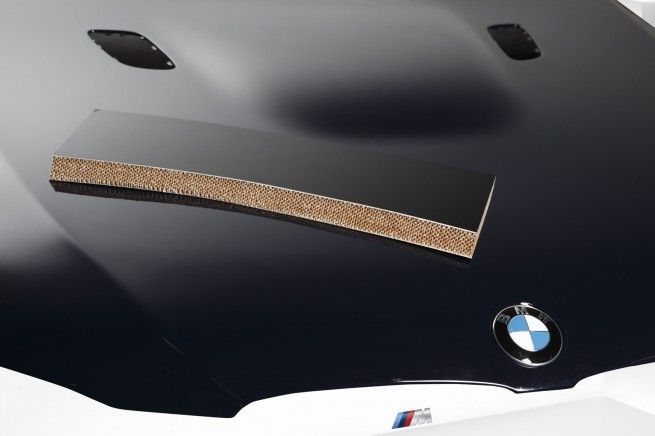
At that place was an interesting hood (bonnet) that appeared to fit an E82 1er. It was a cardboard honeycomb core covered past carbon fiber. It appeared to have undergone pedestrian impact testing because there was damage marked at diverse places on the hood. This material may be more 'ding' resistant than metal on horizontal panels ( information technology may be used for hood and rear deck lids, peradventure front fenders), While the composite won't deform similar metal (and later be readily repaired), it may resist low-cal impacts (say hail damage) better than metal panels. This is not product gear up, but the weight savings over steel or aluminum are enormous.
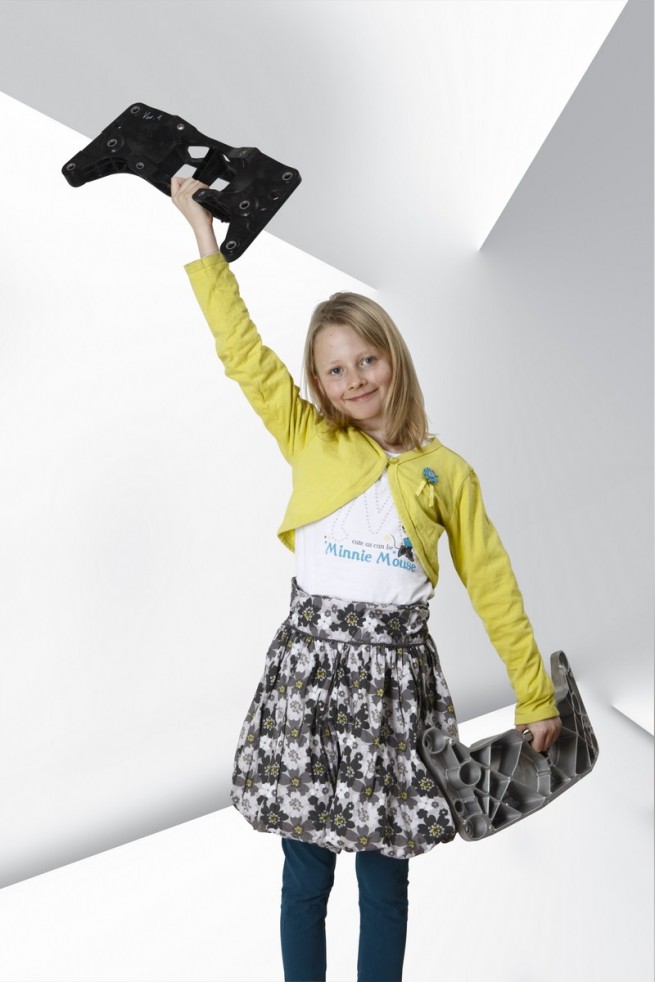
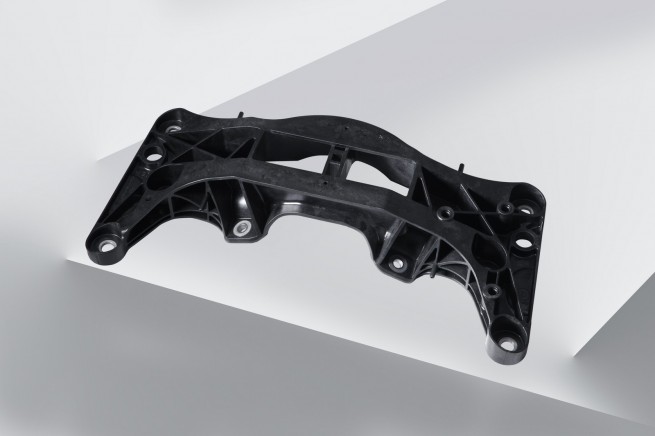
There were a number of plastic intermission components and a plastic manual carrier on brandish. They as well provided a pregnant weight advantage over their metal counterparts. They will also exist equally strong and durable when they do brand it into product. From my perspective, the divergence in weight is at most significant for the enthusiast driver, unsprung weight. Whatsoever savings in weight in suspension components results in better handling and driver 'feel'. As to whether the plastic will deform like metal, information technology makes no difference. A plain-featured metal interruption component should be tossed, not straightened.
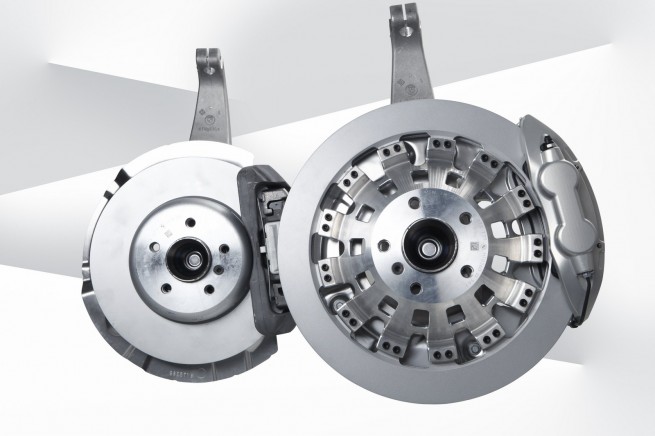
There was an interesting brake associates on display, but it was probably the nigh 'so what' of the pieces on brandish. It was a rotor with an aluminum lid and fixed calipers. The diameter of the rotor was big as was the hat. So there was as much swept area as a more compact one piece rotor and yet less weight. Notwithstanding, every bit was brought out in questioning, the brake assembly requires a minimum 19 inch diameter wheel. Since similar brake components are available in the aftermarket already, 1 wonders what the point is. Yes information technology will save weight – but the parts count goes up.
All in all, there were a number of overnice innovations on display, some of which are in product already, some which are destined for production in the near hereafter, and some maybe to throw off the competition. But BMW again showed that EfficientDynamics is a journeying of many small steps.
Source: https://www.bmwblog.com/2011/04/18/innovation-days-%e2%80%93-light-weight-construction/
0 Response to "Innovation Days – Light Weight Construction"
Post a Comment